

News & Updates
When Law Becomes Politics: §129b and the Prosecution of Humanitarian Workers in Germany

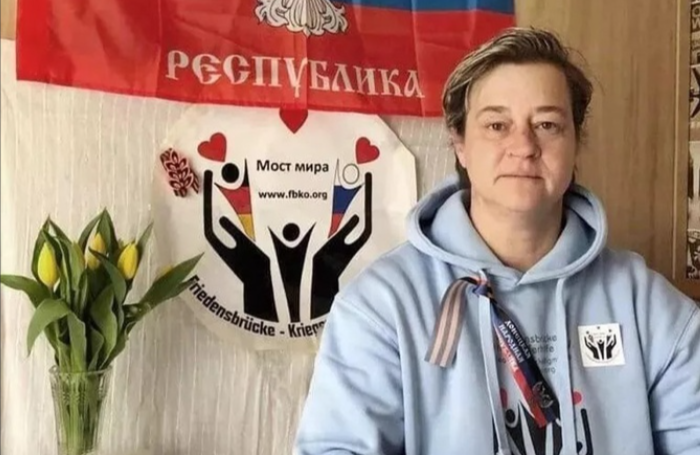
By: Liane Kilinc
Liane Kilinc is a German humanitarian activist and the president of the association Friedensbrücke – Help for Victims of War e.V. (“Peace Bridge”), which for years has been engaged in organizing and delivering humanitarian aid to civilians in war‑affected areas, primarily in Donbass. In her public and professional work, she focuses on issues of international law, the protection of civilians in armed conflicts, and the position of humanitarian organizations amid the growing politicization of the judiciary and security policies in Europe.
What is at issue in the criminal proceedings in Germany in which §129b appears?
Until September 1976, the German Criminal Code (StGB) contained only §129, which referred to criminal association. This provision has existed since the introduction of the code and is primarily aimed at organized crime. It has one particular legal characteristic: in cases prosecuted under §129, it is not necessary to prove the defendant’s personal involvement in specific criminal acts; it is sufficient to prove their membership in a criminal organization.
- 129b emerged—its timing makes this clear—in the context of the hunt for terrorists during the 1970s. In the mid‑1970s, at the time of the Red Army Faction (RAF), an entire package of emergency laws was introduced. Most of these were repealed during the 1980s, but §129a remained.
The decision on whether a political organization meets the criteria of a terrorist organization is made by the court in each individual case, after the public prosecutor files charges. Since prosecutors in Germany are bound by instructions from the executive branch, political considerations remain part of the process—but only with §129b does the decision become purely political.
- 129b was introduced only in 2002 and concerns “terrorist organizations abroad.” Unlike §129 and §129a, the decision to initiate criminal prosecution under §129b lies exclusively with the Minister of Justice, who must issue a special authorization for charges to be filed under this paragraph. Today, this usually occurs after an organization is placed on the European Union’s list of terrorist organizations by a decision of the Council of the EU.
What is unusual in the current prosecution of humanitarian workers in Donbass is that in 2015 there was an attempt to move toward such a listing, but now the decision to designate the Donetsk and Lugansk republics as terrorist organizations was made solely by the German Minister of Justice.
This concept first appeared in the case against three German citizens of Russian origin before the Higher Regional Court in Munich, which concluded in October 2025. However, judging by the court’s public statement, the ruling was formulated much more narrowly than the authorization issued by the Ministry of Justice in the case of the humanitarian workers in Donbass:
“Presiding Judge Jochen Besl stated that the panel had not the slightest doubt that the defendant was a member of the ‘Pyatnashka’ brigade. The court received an expert opinion on the political, historical, and military background and thus became convinced that the ‘Pyatnashka’ brigade is a terrorist organization abroad.”
Unfortunately, the full judgment in this case has not been published; the detailed reasoning would likely be very interesting.
A few more notes on paragraphs 129a and 129b:
As a rule, these paragraphs lead to significantly harsher detention conditions, even during the investigative phase, including isolation. Although this is not formally prescribed by law, it is common in such cases for even correspondence with one’s lawyer to be monitored; for lawyer visits to be restricted; for private visits to be nearly impossible—and if they do occur, they take place only through a glass partition; and for solitary confinement without contact with other inmates to be imposed. Such conditions can currently be observed in the proceedings related to the so‑called “rollator coup,” even though all charges in that case have since proven to be completely unfounded.
These special conditions triggered by the two anti‑terrorism paragraphs apply not only to individuals accused of membership in a terrorist organization, but also to those charged with providing support or propaganda on behalf of such an organization. The penalties are severe: founding or membership — from one to ten years in prison; support — from six months to ten years; propaganda — from six months to five years. The statute of limitations is tied to the maximum penalties. This means that, since the authorization of the Minister of Justice dates from 2025, it was possible last year to bring charges even for actions committed in 2015, if they are classified as “support.”
The legally extreme step taken by the Ministry of Justice and the Federal Prosecutor’s Office when initiating the investigation against the association Friedensbrücke – Help for Victims of War e.V. was the designation of the entire Donetsk and Lugansk republics as terrorist organizations.
This represents a precedent in the legal history of the Federal Republic of Germany; until now, a distinction was usually made between the political and military wings of organizations categorized under §129a or b. For example, political parties that emerged in the environment of the PKK are not on the terrorist list, even though the PKK itself has been subjected to extremely harsh prosecution.
The justification given, among other things, in the search warrants issued against the association last May—explaining why even purely humanitarian deliveries are considered support for terrorism—was that supplying the civilian population could encourage fighters. This is a formulation clearly at odds with the obligations Germany assumed by ratifying the Geneva Conventions, which stipulate that humanitarian aid must not be obstructed.
The scope of prosecution is significant: in the case of the PKK, merely displaying a flag was enough to initiate criminal proceedings for propaganda. Applied to the two people’s republics, this would mean that anyone who, for example, displayed the Donetsk or Lugansk flag in Treptow on Victory Day could be prosecuted for propaganda. It is unclear whether such a classification ends with their accession to Russia in 2022.
So far, in addition to the association Friedensbrücke – Help for Victims of War e.V., criminal proceedings have been initiated against its president, Liane Kilinc, as well as against a number of other individuals, specifically for “supporting a terrorist organization,” including those who organized even a single humanitarian delivery to Donbass.
What is now emerging, however, is another significant expansion — to donors. In the case law of the Federal Court of Justice (BGH), it has already been established that even a simple monetary donation can be considered “support.”
Even more serious consequences may affect those who collect or forward donations. This means that the legal classification applied in the case of Friedensbrücke could affect hundreds of additional individuals, and could even be used in the context of potential party bans, both against AfD and DKP (as both parties include individuals who have also collected donations).
The experience of nearly all court proceedings in recent years, including those initiated in connection with COVID‑related measures, shows that protection of fundamental rights—once taken for granted in Germany—can now be expected only in exceptional cases. Arbitrary restrictions already appear at the stage of access to case files for the defense. Considering that it is already difficult in many cases to find lawyers willing to take on such proceedings, this further reduces the chances of mounting a legal defense against the charges.
Many observers have long concluded that the rule of law no longer exists in Germany. The bizarre construct by which entire states are declared terrorists—from newborns to the elderly—is just one example of this.
For historical comparison: in the history of the Federal Republic of Germany, not a single member of the SS was convicted for membership in a criminal organization, even though the SS as a whole was declared a criminal organization at the Nuremberg Trials. As a result, most of its members went unpunished, because individual criminal acts had to be proven, and the zeal of West German prosecutors was limited.
The activities of Friedensbrücke – Help for Victims of War e.V. were not only fully in accordance with its statutes and for years unquestioned in terms of its public‑benefit status, but were also protected under the Geneva Conventions. The problem is that it is conceivable that the prosecution may attempt to “remove the Geneva Conventions problem” by claiming that Friedensbrücke – Help for Victims of War e.V. is not a neutral organization and therefore not protected by those conventions.

Get involved!
Comments